Role
Lead UX / UI Developer, Researcher
Tools
Figma, Figjam, Google Docs,
Adobe Photoshop
Timeline
January 2026 - March 2026 (10 weeks)
Overview
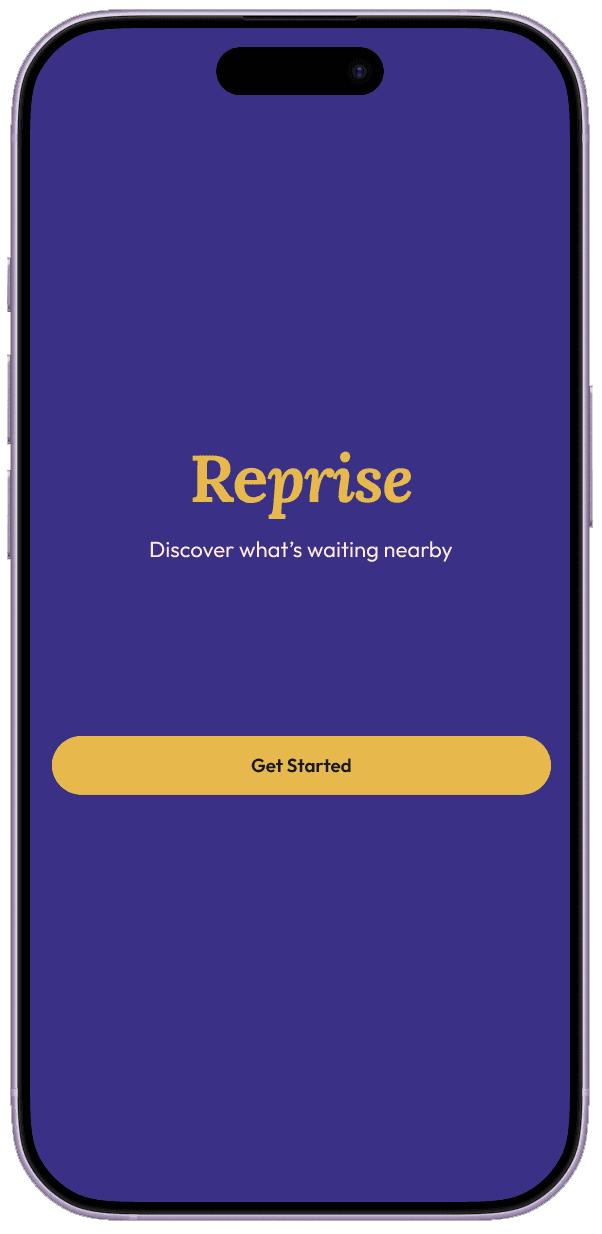
For this project, I worked alongside a group of 4 other designers and researchers in order to develop a solution for common secondhand shopping frustrations that are experienced by customers.
My Role
As Lead UX/UI Designer and Researcher, I:
Led the creation of the low, mid, and high-fidelity prototypes
Facilitated remote interviews and data synthesis
Led design
Ensured consistency across UI, interaction, and system design
Problem Statement
After 12 rounds user interviews as well as a comprehensive ethnographic study, our group created this problem statement:
"People who interact with secondhand stores often struggle with navigation, item location, and find themselves often revisiting previously viewed sections creating dissatisfaction within the shopping process.
Development Process
#1 Research — Our primary goal was to understand product discovery behavior and the challenges people face when shopping at various types of secondhand stores and similar retail environments.
Methods:
Semi-structured, conversational interviews
12 total interviews
Mixture of in-person and remote
Key Insights:
Users experience frustration when faced with unorganized inventories
Customers become overwhelmed by poorly-mapped stores
#2 Definition — We analyzed the data from the interview to form key insights.
#1: Shoppers often experience poor organization in secondhand retail environments.
#2: Shoppers value efficiency and confidence that nothing was missed when searching and/or browsing.
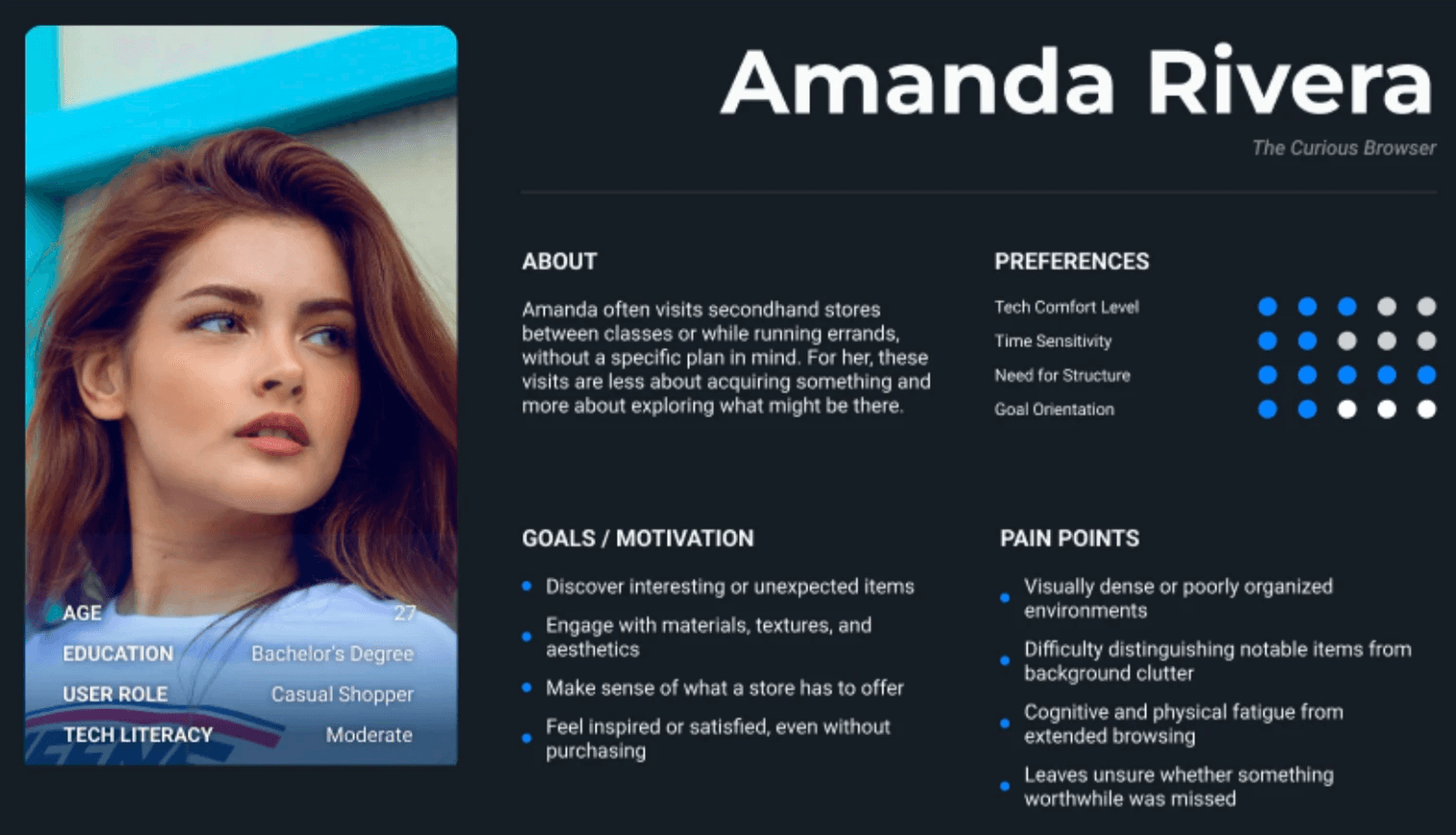
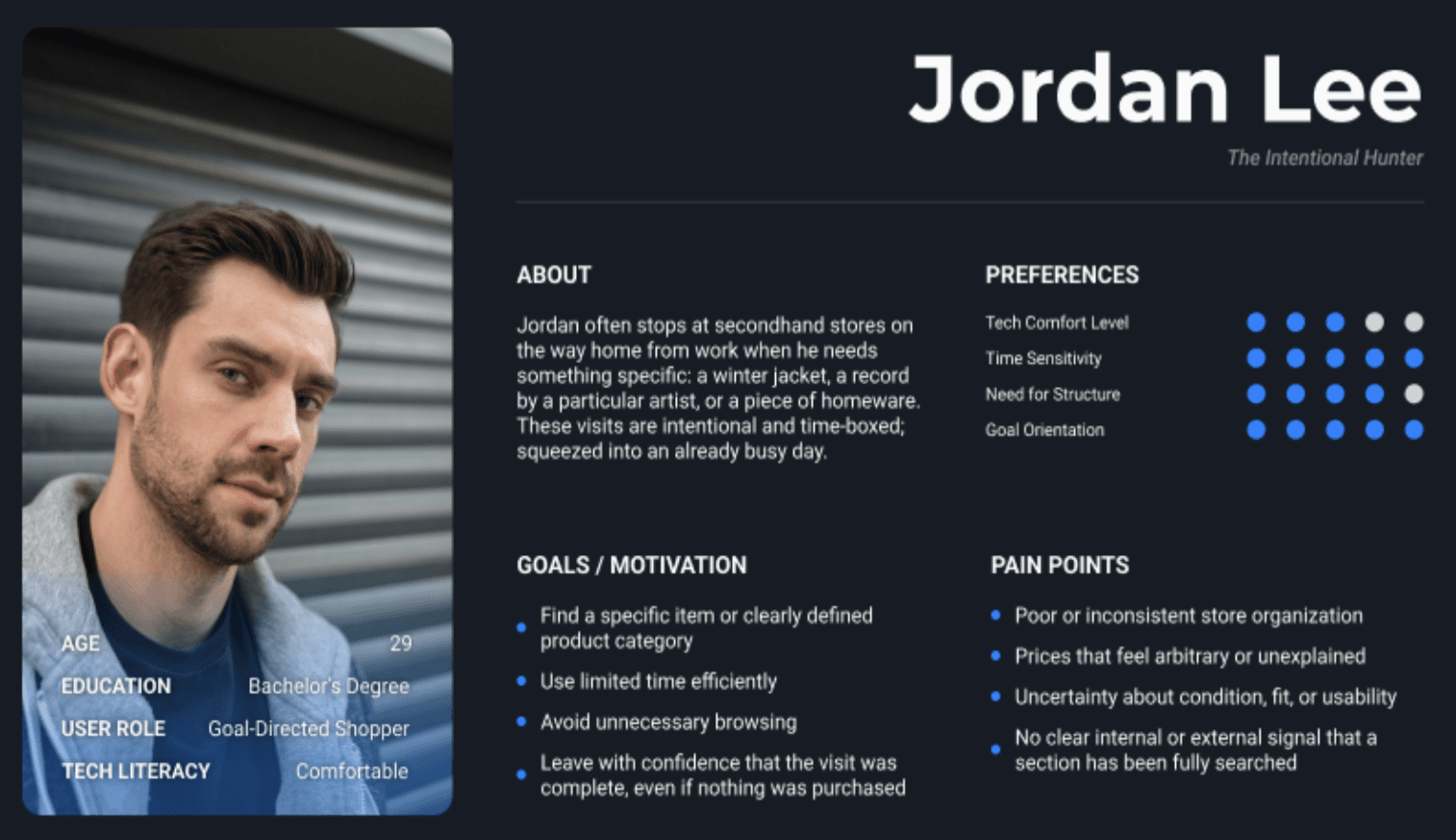
Personas — These Personas would guide the development of the rest of this project.
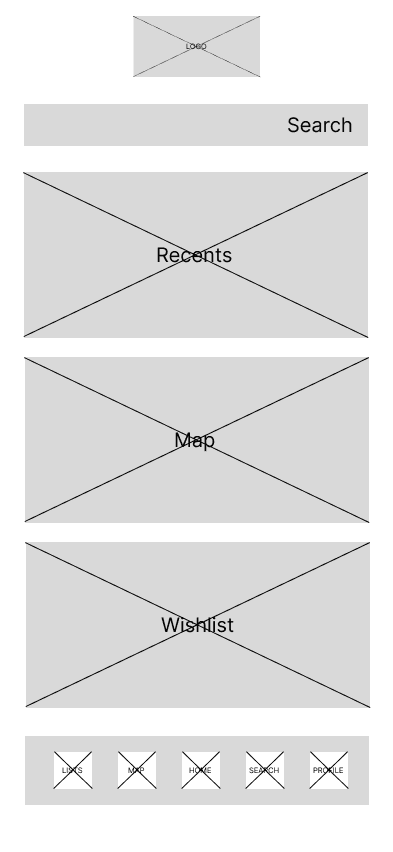
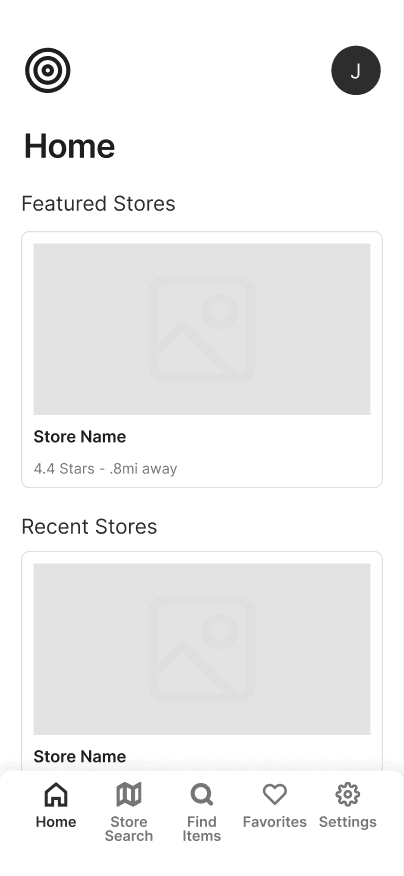
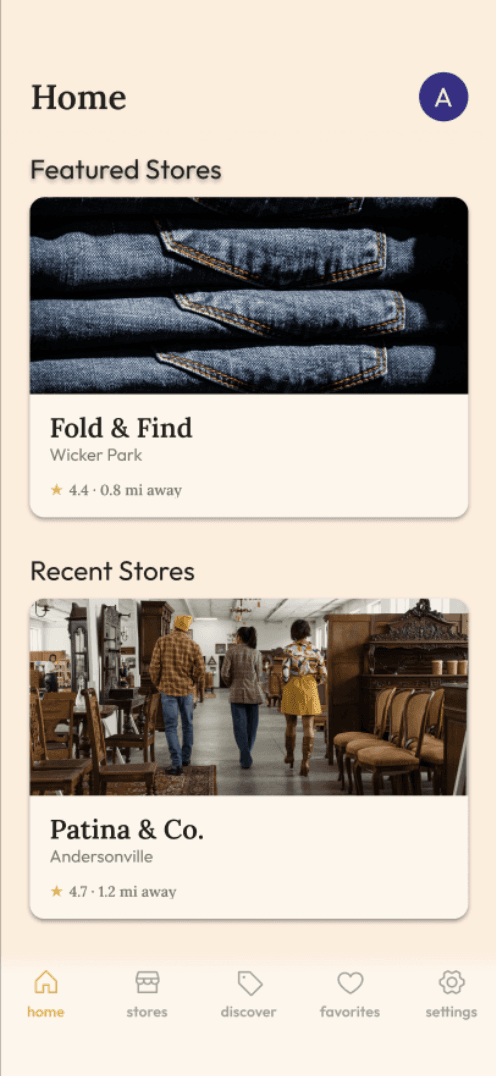
#3 Prototyping — We created low fidelity and mid-fidelity screens in order to have an artifact to test with.
Low-Mid-High Fidelity Examples
Low-Fidelity Prototype
Mid-Fidelity Prototype
High-Fidelity Prototype
#4 Testing — In order to validate our solution, we conducted multiple rounds of usability tests.
Testing Details:
5 participants interviewed total
Roles interchanged per interviewee between - Greeter, Facilitator, and Observer
Script was written to produce a mix of quant and qual data alongside repeatability being paramount
Key Findings:
#1: Original Onboarding experience often caused confusion or hesitation in users.
#2: Too many search bars caused distrust and uncertainty with users.
#3: Users cited looking for more information when looking at the store and items pages.
We incorporated this feedback into later iterations of the prototype before moving on to high-fidelity.
Final Solution
We built a fully-interactive prototype of a secondhand store/ item discovery application.
Key features include:
Comprehensive user-onboarding flow
Profile management and personalized discovery
Store/ item search, filtering and selection
Thorough product details pages
Store information pages
In-store navigation capabilities.
This features create a more in-depth and accessible experience that will make secondhand shopping far more engaging for shoppers.
Core takeaways
This project was an invaluable experience.
While I had worked in group/ cross collaboration settings before, I had never worked with people with such varying schedules and workplace situations. This lead to numerous situations that forced us to be flexible if we wanted to complete this project in the short time-timeline we had.
This was also the first time I had engaged with ethnographic observation, so that was a significant learning experience that led to me becoming a stronger UX/ UI designer. I have carried this project and the things I learned with me into other projects and research studies ever since.


Let's Get in Touch
Dante Corsetti